Monday, January 29, 2007

The Nazca Lines and Back to Lima in One Day

Good day again to you all and a very happy and belated new year! I wish you all the very best for the year and hope that you all manage to get out and travel to some extraordinary places in 2007. It has been sometime since my last post – and this is mostly due to the fact that we’ve been busy working on the new class adventure travel website – www.cat-travel.com. It is also partly due to the fact that my family and I have spent a lot of time traveling around Latin America looking out for new tours, destinations, and new offices for CAT – in such places as Chile and Costa Rica. My first entry for the year however concerns itself with the Nazca Lines and how getting there, seeing the awesome sight of the lines, and getting back to Lima can now be done in one day.
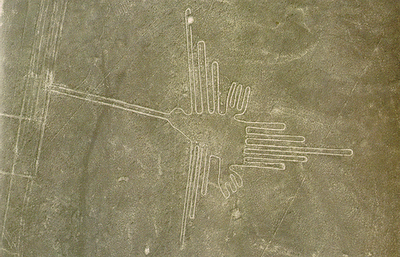

Approximately 2000 years ago the Nazca Culture – for one reason or another (the theories are endless) – decided it would be in their best interest to carve giant geometric designs, patterns, and stylized animal figures into the surface of a rather flat, inhospitable, and barren plain. Whether in fact the Nazca people created the lines to appease the gods, or whether they made them simply in order to confuse us is largely immaterial, especially as the reasons behind their creation have been debated for so long that any hope of finding a concrete explanation for their existence seems to have disappeared. What hasn’t disappeared however, are the lines – and after 2000 years they are as resplendent, mind boggling, and impressive as ever.

The town of Nazca lies about 450 kilometers south of Lima and the amazing geoglyphs, located on the plateau outside of town never fail to dazzle me. What does annoy me is that if you’re on a limited time frame it’s a difficult site to see. Traditionally one has always had to take a bus from Lima to Nazca which takes roughly seven hours. It actually took me nine hours to get there by bus a couple of years ago. What this means is that unless you really want to spend some time exploring the region –you’re looking at a two day trip at the very least. If the bus is fast you can get there and back in 14 hours. It’s a large price to pay considering the Cessna flight over the lines only lasts 30 minutes. This rather time consuming, line viewing haul is no longer necessary though.
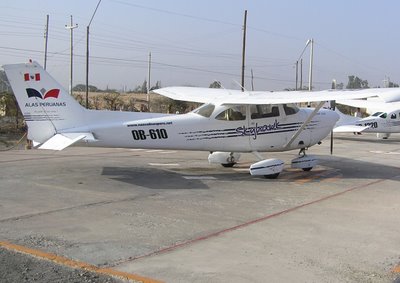
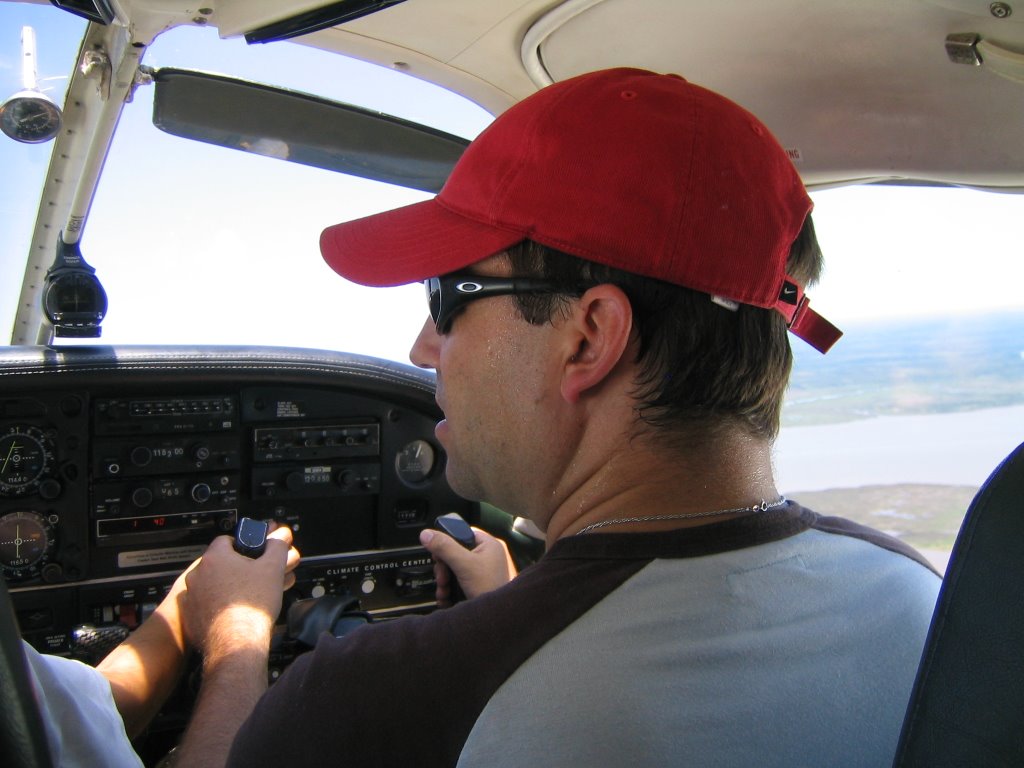
I recently discovered – to my pleasure I should add – that it is now possible to see the Nazca Lines in one day from Lima. A flight in the morning takes you to Ica – where you board a Cessna and fly directly over to the Nazca Lines. The trip over the lines lasts a little longer owing to the distance, and after returning to Ica one can enjoy a little seafood lunch, lounge about comfortably at the swimming pools at Las Dunas hotel, and even try some famous Huacachina sand-boarding before returning to Lima on a late afternoon flight.
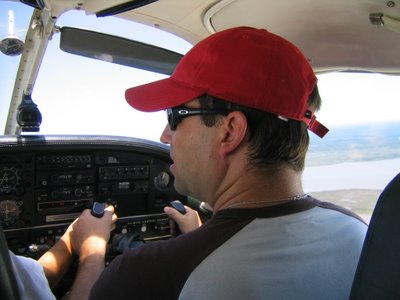
I did this trip recently and found it to be not only a great way to get to see the lines, but also found it to be rather relaxing. It’s a little fast paced, but you are given plenty of time to sit around and catch up on some reading. I’d recommend this trip to anyone pressed for time while traveling in Peru, as well as for those who like to get things done comfortably and quickly. On the other hand there is a lot to be said about Nazca and other sites in the area. The Hacienda Cantayo, located on the outskirts of town, is possibly one of the finest hotels in Peru and is definitely one of my personal favorites. Another reason to stay in Nazca is to see the rather eerie - although fascinating - ancient bone cemetery of Chauchilla on the outskirts of town. So there are things to see and do in the area if you want to take your time. It is however, nice to know that we now have the option of getting down to Nazca, seeing the lines, and getting back to Lima in a day.

I hope this helps anyone interested. Keep on traveling!

Bart

www.cat-travel.com

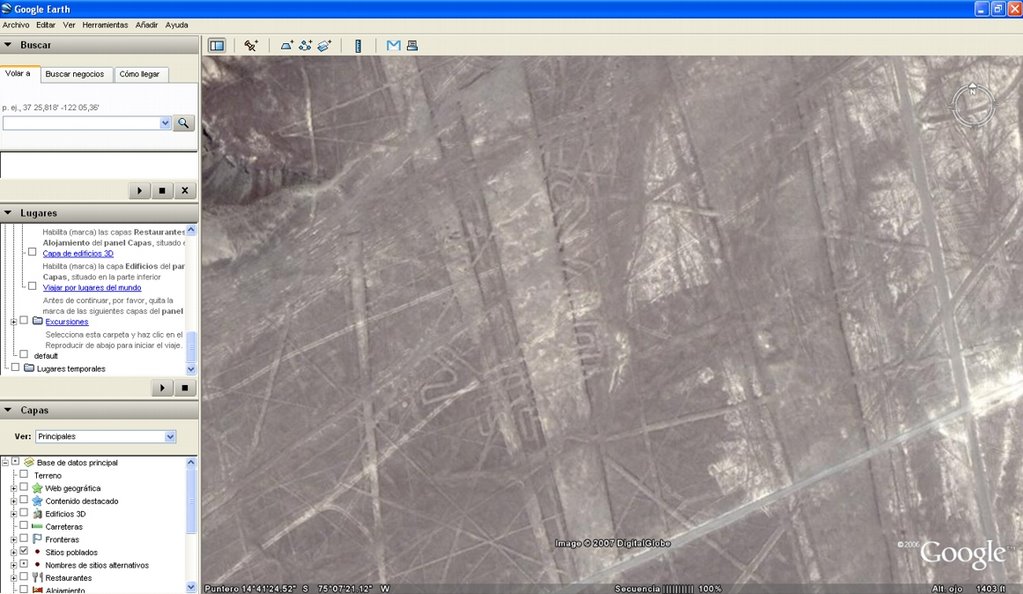
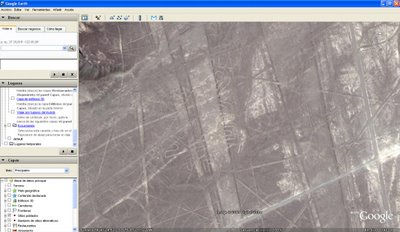
By the way, I noticed that you can now find the Nazca Lines on Google Earth if you look hard enough. For those of you interested, search the Nazca Plain that lies in the vicinity of 14°41'00" S and 75°07'00" W.
Sunday, September 17, 2006

A Trip for Two to Kuelap: the second Machu Picchu

Good day fellow travelers – It has been a while since we met and I thought I’d write something up on a recent return trip my wife Karin and I undertook to Kuelap, and how traveling to these amazing Northern ruins has become a lot easier over the past ten years.

My first trip to Kuelap was a ten years ago and was none to easy, but if you’ve spent some time traveling you’ll agree that on some occasions, the harder a place is to get to - the more worthwhile it is once you get there.


Photobucket - Video and Image Hosting

The beauty of Kuelap far outweighed the hardships of getting there, and so it was with very little hesitation and a lot of excitement that Karin and I set off once more to return to Peru’s secret ruins. Ten years ago I was fascinated by the enchanting ruins of Kuelap – described by many as a second Machu Picchu – and ever since then I have been eagerly trying to getting myself back there. Well, I was in Peru recently with Karin, and with some spare time on our hands we set off once more for what would be an inspiring trip up north.

To reach Kuelap one has to spend a few nights in Chachapoyas, a mountain town only accessible by road from either Cajamarca or Chiclayo. The route from Cajamarca passes though the Utcubamba Valley and provides superb views from a road that is literally carved into cliff faces thousands of feet high – it is visually stunning but can be very dangerous. Ten years ago Karin and I took the overnight bus from Chiclayo. We arrived early in the morning and after having spent the entire evening bouncing around on wooden seats at the back of a bus, we were tired, bruised, and in some serious need of sleep. At present however things have changed, one can now arrange private transport to Chachapoyas and the roads are in a better - albeit not perfect - condition. What this means is that the proverbial ‘pain in the ass’ has both literally and figuratively been removed from the trip. We were driven in private transport, were able to stop and walk around at sites on the way, and managed to get some sleep on route. I actually felt refreshed when we reached Chachapoyas this time around.

Photobucket - Video and Image Hosting


Surprisingly few tourists make it to Chachapoyas which I find remarkable; not only is it close to the ruins of Kuelap and a number of other attractions in the area, but over the years it has become increasingly more accessible to reach. It’s a laidback town, one of the most scenic in Peru, and perhaps one of my favorites. Outside the hotel a local kid proudly tells me that Chachapoyas means ‘Misty Mountain’ and that Chachapoyans are all ‘Cloud Warriors’. And who am I to disagree? - Clouds float through the town at eye level, and while the townsfolk seem too friendly and laidback to ever be warriors – they are said to be descendants of the Chacha culture that built Kuelap and warred with the Incas.

Nowadays private tours run daily to Kuelap from Chachapoyas leaving at about 8am and returning at about 4 or 5pm the same day. This doesn’t mean there are hordes of tourists visiting – on the contrary there are very few indeed. What it does mean is that one doesn’t have to spend 3 days waiting to get to the ruins as I had to ten years ago.
Even though Kuelap is only 27km from Chachapoyas (as the crow flies) – the drive there today can take up to three hours. It’s a rough drive it must be said that it scarcely compares to the hardships I went through in getting there the last time. On my first trip I was assigned to the rattling back seat of a collectivo (a minivan) with a couple of chickens and a collection of rusty farming implements for no less than seven hours. This time around I got to enjoy the stunning views over the canyons and ravines on the way there from a comfortable car seat, and we even stopped in one of the local villages to enjoy a fantastic Chacha lunch on the way back.

Ten years ago I finally arrived in Kuelap after taking a 14 hour bus ride to Chiclayo, an 11 hour bus ride to Chachapoyas, a hellish 7 hour ride in the back of a collectivo, and a half an hour steep hike. Minutes before I set my eyes on Kuelap I wondered whether it would all be worth it.

It is. Believe me.

Photobucket - Video and Image Hosting


And it still is now. Only this time round I actually enjoyed getting there.

Like the time before - I strolled around a corner and quite unexpectedly, there it was – towering yellow walls amid an explosion of vivid plant life. Groups of Llamas graze on green grass while being dwarfed by the gigantic walls of Kuelap, which appear barely able to restrain the natural overgrowth spilling down their sides. It took my breath away once again.

It is very easy to see that Kuelap was built as a fort; it is quite literally impenetrable and it is no wonder it took the Inca so long to conquer the Chacha people. Entering through the very narrow yet impressive entrance way we arrived within the complex to find an extensive number of ruins hidden under a jungle of brightly colored Air-plants, Bromeliads and Orchids. As with my first visit to Kuelap, I was filled with this inexplicable contentment – I had the same feeling when I first visited Machu Picchu, and while both places are very different from one another, they inspire the same kind of awe and admiration one reserves for sacred sites.
Photobucket - Video and Image Hosting


This time around, one of the most extraordinary parts of the trip to the ruins for Karin and I was that we were there for the better half of an entire day and were, save for the guide who had brought us, completely alone. We did not see another face, Peruvian or foreigner, for the entire time we were there. Ten years ago there had been a few other foreigners on site – but this time there was no one. We spent most of the day walking through the labyrinth of forgotten ruins and temples, and were filled with a sense of peace and isolation. Besides taking the occasional picture – there isn’t very much to do in Kuelap other than sit and admire the ruins in wonder and contentment. In the early afternoon we returned to the car for the ride back to Chachapoyas.

Once again Kuelap lived up to my expectations. Easier to get to this time around, my feelings of awe and my veneration for this sacred site are no different today as they were upon my first visit. Kuelap certainly has something very special about it, something I will never forget, and something I definitely want to see again.

Go for it – and keep on traveling

Bart

Useful Information on Kuelap


Photobucket - Video and Image Hosting


  • Kuelap is the largest ancient building in the Americas and is estimated to contain 3 times more stone material in its construction than the largest pyramid at Giza, Egypt.
  • Only 1% of tourists visiting Peru journey to the north of the country and only a tiny fraction of these few visit Kuelap
  • At 3000 masl, Kuelap’s outer walls measure 600 meters in diameter in some areas and are as high as 19 meters in others
  • Kuelap contains over 400 buildings within its walls with three distinctive sections, the first for the commoners, the second for the military, and the third for the royalty and high priests
  • The Chacha culture, about whom very little is known, began building Kuelap circa 800AD
  • Towards the beginning of the 16th century the Incas took control of Kuelap after a lengthy war, only to abandon it when the Spanish arrived in the middle of the same century.
  • There are plans to possibly build a cable car up to the Kuelap fortress. While this project may take some time to be implemented, it will be much less detrimental on both the culture and environment around Kuelap when mass tourism discovers this amazing secret.


Travel Advice and Tips

Photobucket - Video and Image Hosting


  • Keep your eyes open for blond haired, blue eyed locals in the area. Many theories surround the origins of these people who claim to have no European ancestry whatsoever. One such theory is that they are the direct descendants of the Chacha people whom the Inca described as a ‘tall and fair’ race
  • Make sure you take a lot of water and a small snack on your tour of Kuelap
    El Chillo is the best hotel in the Chachapoyas area and is well worth checking out, but do not expect any luxury there.
  • There is far more to the region than just Kuelap. If you have some extra time you should visit Revash, Yalape, and the cliff hanging Karajia Sarcophagi close to San Miguel de Cruzpata, which featured in National Geographic some years back. All are very impressive sites
  • If you can, take a private tour to the ruins. Not only is the ride more comfortable, but its faster, safer, and provides a more personal experience

Friday, July 28, 2006

Video Blog Test

Hi There,

Its amazing how technology makes things easier... one or two years ago working with videos on the internet was painfully heavy. Now it is so easy, I´m thinking in combining the blog entries with podcasting. This is just a test of a reel made for our tour operator Class Adventure Travel . I´ll be back soon from somewhere in South America with my first video blog entry!

Keep Traveling!